I write about Personal Development / Emotional Intelligence / Leadership / Transformative Thinking / Innovative Approaches / Intellectual Integrity / Innovation / Empowerment / Organizational Transformation
Insights Newsletter No. 227
Published 15 days ago • 17 min read
INSIGHTS
Newsletter No. 227
Good morning. The truth does not need to be polished to be powerful. It needs to be lived when it is inconvenient.
Insights, now in my voice.
New! You can hear the Insights Newsletter straight from me. I've recorded this issue, and every Deep Dive on the site now has an audio version too. If you'd rather listen than read, tap the button, and you'll find the player at the top of the page on the website. And if reading is your thing, carry on, everything is right here as always.
This is a sneak peek of this week’s Deep Dives article. Published today!
Emotional intelligence is often discussed in terms of empathy, self-awareness, regulation, and communication, but sincerity may be the forgotten dimension that gives all of it weight. People can learn the language of emotional intelligence without becoming more honest, accountable, or trustworthy. This Deep Dive explores why sincerity separates emotional fluency from emotional truth, and why a clumsy truth can often be more healing than a polished performance.
This is a sneak peek of this week’s Deep Dives article. Published today!
Authenticity has become one of the most overused words in modern life, but being seen as real is not the same as being real. Sharing more, sounding vulnerable, or building a relatable public image does not mean much if behavior, values, and choices do not line up. This Deep Dive examines why authenticity is not a brand, a vibe, or a content strategy, but the daily discipline of living close enough to the truth that your life does not require constant translation.
This is a sneak peek of this week’s Deep Dives article. Published today!
Some leaders avoid hard conversations, unclear standards, weak performers, toxic behavior, and difficult decisions because they believe they are preserving peace. In reality, they are often exporting discomfort to everyone else. This Deep Dive explores why comfort-seeking leadership creates ambiguity, resentment, and cultural confusion, and why the strongest leaders understand that some discomfort is not a sign something has gone wrong. It is the price of keeping things right.
This is a sneak peek of this week's Deep Dives Book Review. Published today!
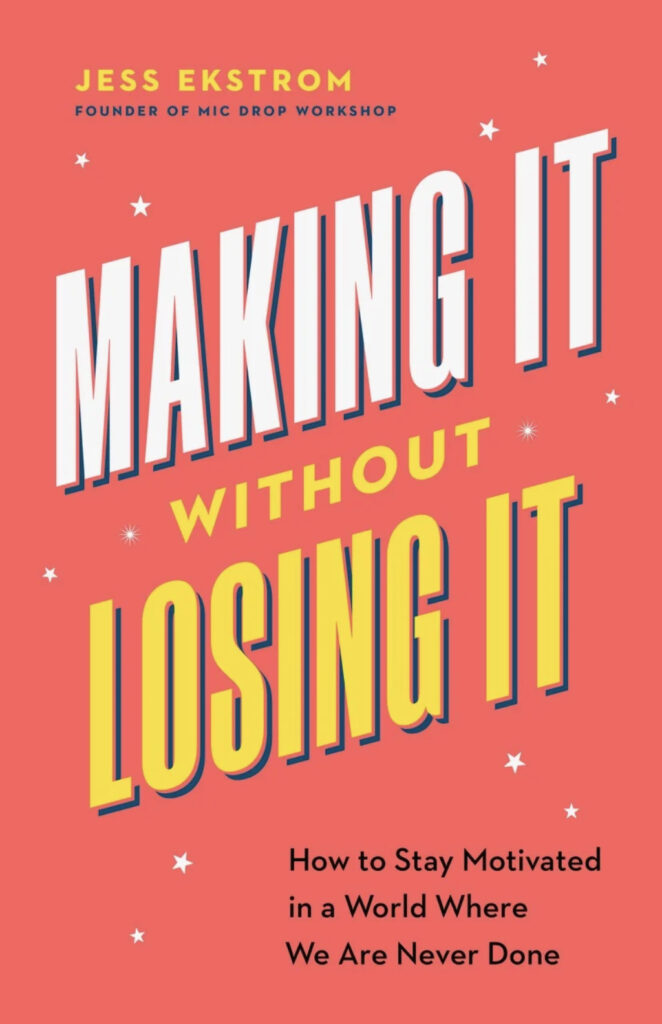
What if the problem is not that we lack ambition, but that we keep asking achievement to give us peace? In Making It Without Losing It, Jess Ekstrom challenges the exhausting belief that joy, confidence, and self-worth live on the other side of the next milestone. This Deep Dive explores how to stay motivated in a world where we are never truly done, why “making it” can still feel strangely incomplete, and how to pursue meaningful success without setting your inner life, relationships, and sense of self on fire.
Emotional Regulation in the Age of Instant Everything
We live in a world that has made almost everything faster except human maturity.
Messages arrive instantly. Opinions form instantly. Outrage spreads instantly. We can avoid boredom within seconds, express anger before thinking, seek reassurance before self-reflection, and fill every uncomfortable pause with a screen.
The modern world has become very good at removing friction.
But emotional regulation is built through friction.
We are living in an age that rewards immediacy while maturity still requires pause. The nervous system has not evolved at the speed of technology.
Emotional regulation has become harder not because human beings are weaker, but because the culture keeps giving us tools to escape the discomfort that regulation requires us to tolerate.
The World Trains Reaction
Instant everything trains the reflex to respond before reflecting. A message lands, and we answer. A comment stings, and we defend. A feeling rises, and we look for a way to discharge it quickly.
This speed creates the illusion of honesty. But not every immediate reaction is truth.
Emotional regulation begins with the humility to admit that the first feeling may be real, but it may not be ready to lead.
The pause is where maturity enters.
A pause does not mean suppression. It means giving the emotion enough room to be understood before it becomes behavior.
Discomfort Is Not an Emergency
One of the great emotional mistakes of modern life is treating discomfort as an emergency. We feel anxious, bored, lonely, restless, rejected, uncertain, or misunderstood, and something in us immediately reaches for relief.
But discomfort is often information, not danger.
Anxiety may be asking for preparation. Loneliness may be asking for honest connection. Anger may be asking for a boundary.
Emotional regulation does not mean making discomfort disappear. It means staying present long enough to learn whether the feeling requires action, acceptance, rest, repair, or simply time.
Instant Expression Is Not Always Emotional Honesty
We often mistake expression for processing. We vent, post, text, complain, explain, accuse, confess, or dramatize what we feel, and because the feeling has left the body in language, we think we have dealt with it.
But expression without reflection can simply distribute an unprocessed emotion to everyone nearby.
The world gives us microphones before it gives us maturity.
The emotionally regulated person understands that not every feeling deserves immediate publication.
The Nervous System Needs Slowness
The body is not a machine that can be commanded into calm simply because the mind prefers it. Emotional regulation is physical as well as psychological. The body prepares to fight, flee, freeze, or defend long before the intellect has constructed a sensible explanation.
This is why regulation requires practices that slow the body, not just arguments that correct the mind.
In an instant world, slowness is not laziness. It is recovery of command.
Leaders Must Regulate Before They React
Emotional regulation matters everywhere, but leadership amplifies its consequences. A leader’s unmanaged emotion does not remain private. It becomes organizational weather.
This is why leaders do not have the luxury of emotional carelessness. They are allowed to feel deeply. They are not allowed to outsource the cost of those feelings to everyone around them.
A leader who regulates does not become bland or emotionless. They become safer to tell the truth to. They can hear bad news without punishing the messenger.
That is not softness. That is discipline.
The Future Belongs to the Well-Regulated
As technology accelerates, emotional regulation will become more valuable, not less. But the human advantage will increasingly belong to those who can create space between stimulus and response.
The future will not merely reward people who can think quickly. It will reward people who can slow themselves enough to think clearly.
The person who can sit with discomfort without immediately discharging it becomes less manipulable.
They become harder to provoke and easier to trust.
The Discipline of the Pause
Emotional regulation in the age of instant everything is not about becoming detached from life. It is about staying present without being hijacked. It is about allowing emotion to become information rather than instruction.
The modern world will keep inviting us to react faster. The stronger life asks us to pause longer.
Not forever. Just long enough to remember who we want to be before the emotion decides for us.
That pause may be the most underrated form of wisdom left.
QUICK READ — PERSONAL DEVELOPMENT
The Integrity Tax: Why Small Compromises Eventually Cost Everything
Integrity is rarely lost in one dramatic act. The larger collapses usually begin smaller than that.
A detail gets softened. A truth is delayed because the timing is awkward.
None of it feels catastrophic at the time.
That is the danger.
The integrity tax is the hidden cost of small compromises that appear affordable in the moment but compound over time. But eventually, the cost appears in places that are much harder to repair: trust, judgment, self-respect, culture, reputation, and the quiet authority of being able to look people in the eye without managing the story.
Integrity is expensive to maintain in the short term. It is far more expensive to lose.
The First Compromise Usually Comes With a Good Explanation
Most compromises do not arrive looking corrupt. They arrive looking practical.
We tell ourselves, “This is just how business works.” “We will clean it up later.” “This is not the hill to die on.”
But the danger begins when practicality becomes a cover for cowardice.
There is a difference between a difficult tradeoff and a self-serving compromise. A tradeoff is named honestly. A compromise hides from itself.
Integrity does not require perfection. It requires honesty about what we are doing and why.
Small Compromises Train the Conscience
The conscience is not static. It is trained by repetition. Eventually, the compromise no longer feels like a compromise. It becomes how things are done.
That is how standards erode.
A leader who tolerates one toxic high performer eventually becomes comfortable explaining why performance matters more than culture. A team that avoids one hard truth eventually builds a culture where truth arrives late, softened, and politically edited.
The cost is not only the original act. The cost is who we become in order to keep living with it.
The Tax Shows Up as Distrust
Small compromises eventually become visible, even when no one can name them precisely. People may not know the full story, but they sense the pattern. They notice what gets tolerated. They notice who is protected.
Trust is not lost only through scandal. It is also lost through inconsistency.
Once trust is taxed heavily enough, even true statements begin to sound like positioning.
Integrity Is Most Expensive When It Is Inconvenient
Almost everyone values integrity when it costs nothing. The test comes when integrity threatens something we want.
Integrity becomes real when there is something to lose.
That is why leadership reveals character so clearly. Leaders constantly face moments where the right answer is not complicated, but it is costly.
A company’s culture is built in precisely these moments. Culture is built when integrity has a price and leadership decides whether to pay it.
Self-Respect Is Part of the Bill
The integrity tax is not only external. It is internal.
Every time we knowingly violate our own standards, something inside us registers it.
But self-respect is not fooled forever.
Integrity keeps a person internally coherent. It allows the public self and private self to live in the same house. When that coherence breaks, life becomes a performance of consistency rather than the experience of it.
The Recovery Is Expensive Too
Once integrity has been compromised repeatedly, repair is possible, but it is rarely cheap.
Avoiding the hard thing now often creates a harder thing later.
The conversation you avoid today may become the termination you cannot avoid tomorrow. The truth you delay today may become the story no one trusts when you finally tell it.
Integrity is easier to protect than to reconstruct.
The Quiet Power of the Clean Line
There is enormous strength in a clean line. Not a rigid, humorless, self-righteous line, but a clear one.
Clean lines reduce drama because they remove unnecessary negotiation with the self.
They also create trust. People may not always like the decision, but they learn the standard is real.
Integrity is not about claiming moral superiority. It is about refusing to keep buying short-term relief with long-term damage.
The Cost of Keeping Yourself
At some point, everyone pays a tax. We either pay the short-term cost of integrity, or we pay the long-term cost of compromise.
The integrity tax is real. But it is far cheaper to pay it early.
Because small compromises do not stay small. They teach us what we are willing to tolerate.
Eventually, the question is not whether the compromise worked.
The question is what it cost to become the kind of person, leader, or company for whom it became acceptable.
Control often looks like leadership from a distance. The leader knows everything, approves everything, reviews everything, corrects everything, and inserts themselves into every meaningful decision.
In the short term, this can feel responsible.
But control-focused leadership carries a hidden cost.
It quietly destroys accountability.
Not immediately. Not obviously. In fact, at first it may appear to improve accountability because the leader is watching everything more closely.
But over time, something dangerous happens. People stop owning outcomes and start managing approval. They learn that the safest path is not to decide well, but to avoid being wrong in front of the person who really holds the authority.
That is not accountability. That is dependence wearing a professional outfit.
Control Replaces Ownership With Permission
True accountability requires ownership. Ownership means a person understands the goal, has the authority to make decisions, accepts responsibility for the result, and learns from the consequences.
Control interrupts that chain.
When every decision must be approved, ownership becomes symbolic. The person may have the title, but not the authority. They stop making judgment calls and begin seeking permission.
The leader may then complain that people are not stepping up.
But people do not step up into spaces that are already occupied.
Micromanagement Teaches People to Think Smaller
Control-focused leaders often justify their behavior by saying people are not ready for more responsibility.
But constant control does not develop capability. It often prevents it.
The irony is brutal. The more the leader controls because the team lacks judgment, the less opportunity the team has to develop judgment.
Fear of Being Wrong Becomes Stronger Than Desire to Be Right
In healthy accountability cultures, people want to get things right because the work matters.
In control-focused cultures, people often become more focused on not being wrong.
That shift may seem subtle, but it is enormous. When avoiding mistakes becomes more important than pursuing the best answer, the organization becomes cautious, political, and slow.
People may still work hard. They may still care. But their best thinking is no longer fully available. It is being filtered through the question, “How do I avoid getting this wrong?”
The Leader Becomes the Bottleneck and the Excuse
Control-focused leadership creates a predictable operating problem: the leader becomes the bottleneck.
But the deeper problem is that the leader also becomes the excuse.
Control gives people a way out of accountability because it allows them to detach from the final decision.
Control Often Protects the Leader More Than the Business
Leaders rarely like admitting this, but control is often emotional. It may be dressed in operational language, but underneath there is usually fear.
At times, control protects the business. At other times, it protects the leader from discomfort.
Accountability Requires Clear Standards, Not Constant Supervision
The alternative to control is not chaos. But mature accountability does not depend on constant supervision. It depends on clear standards.
Control says, “Check with me.” Accountability says, “Here is the standard, here is the authority, here is how we will measure the outcome, and here is when we will review what happened.”
That distinction matters because accountability must be designed.
Letting People Own Means Letting Them Learn
If leaders want accountability, they must tolerate the discomfort of watching people learn.
A control-focused leader treats too many differences as problems. A mature leader asks, “Is this below the standard, or simply different from my preference?” That question alone can change a culture.
The Goal Is Not Less Leadership. It Is Better Leadership.
Control-focused leaders often fear that stepping back means becoming less involved. But the real work is not absence. It is better presence.
This requires more discipline than control. Control is often just intervention. Better leadership is architecture.
It is easier to fix the thing yourself than to develop the person who should have fixed it. But if you keep fixing everything, you do not have an accountable organization. You have an organization trained to wait for rescue.
Accountability Needs Room to Breathe
Control-focused leadership quietly destroys accountability because accountability cannot breathe where authority is constantly reclaimed. People cannot own what they are not trusted to decide. They cannot grow judgment if every judgment is overridden. They cannot become accountable leaders if the real leader is always waiting behind them with a red pen.
That is when accountability becomes real.
Not when everyone waits for the leader to approve the answer, but when people have the clarity, authority, courage, and consequence to own the answer themselves.
Quotes of the Week
QUOTE — EMOTIONAL INTELLIGENCE
QUOTE — PERSONAL DEVELOPMENT
QUOTE — LEADERSHIP
Reframing
Why Emotionally Intelligent People Still Stay in Toxic Relationships
There is a comfortable myth that emotionally intelligent people would never stay too long in a toxic relationship. They would see the pattern clearly, name the dysfunction early, set a boundary, leave with dignity, and never confuse chemistry, loyalty, empathy, or history with something healthy.
If only human beings were that simple.
Emotionally intelligent people stay in toxic relationships for many of the same reasons everyone else does, but often with better language, deeper empathy, and more sophisticated explanations. They do not always stay because they cannot see what is happening. Sometimes they stay because they can see too much. They see the wound behind the behavior. They understand the childhood story. They recognize the fear under the control, the shame under the defensiveness, the abandonment under the volatility, the insecurity under the criticism.
Their insight becomes the very thing that keeps them stuck.
Emotional intelligence is useful. It helps people read patterns, understand motives, regulate themselves, and communicate with greater care. But emotional intelligence is not the same as self-protection. Understanding someone’s pain does not automatically mean knowing when to stop making yourself available to it.
Insight Can Become a Trap
Emotionally intelligent people are often skilled at context. They do not reduce others to their worst moments. They ask why. They look beneath the reaction. They see emotional patterns before other people do. This can make them compassionate partners, friends, leaders, and family members.
But in a toxic relationship, context can become captivity.
Instead of saying, “This behavior is harmful,” they say, “I understand why they do this.” Instead of saying, “This pattern is damaging me,” they say, “They are acting from fear.” Instead of saying, “This is not acceptable,” they say, “They were never taught how to communicate safely.”
All of that may be true. It may also be irrelevant to the decision of whether the relationship is healthy.
A person’s pain can explain their behavior without making that behavior livable. Their past can make them understandable without making them safe. Their wounds can deserve compassion without earning unlimited access to your life.
This is where emotionally intelligent people sometimes lose their footing. They confuse understanding with obligation.
Empathy Can Become Self-Abandonment
Empathy is beautiful when it connects two people in mutual humanity. It is dangerous when it becomes one person’s permanent job to absorb the emotional consequences of another person’s unhealed life.
Toxic relationships often recruit the empathetic person into endless explanation. They become the interpreter, the calmer one, the bigger person, the emotional translator, the person who knows how to de-escalate, soften, forgive, and understand. They learn what to say, what not to say, when to wait, when to reassure, when to go quiet, when to make themselves less threatening.
Over time, empathy stops being connection and becomes emotional labor.
The emotionally intelligent person may tell themselves they are being patient. But patience without self-respect becomes permission. Compassion without boundaries becomes availability for harm. Understanding without consequence becomes a training program for dysfunction.
The question is not, “Can I understand why this person behaves this way?”
The better question is, “Who am I becoming while I keep understanding it?”
They Believe Better Communication Will Fix Everything
Emotionally intelligent people often have faith in conversation. They believe that if the issue can be named clearly enough, gently enough, and honestly enough, the relationship can improve. They try to explain their hurt without blaming. They choose careful words. They regulate their tone. They read the room. They offer frameworks, reflections, patterns, and possibilities.
Sometimes that works. Healthy people can receive feedback, reflect, repair, and change.
But toxic dynamics are not always communication problems. Sometimes they are character problems. Sometimes they are accountability problems. Sometimes they are power problems. Sometimes one person is not misunderstanding the impact. They are avoiding responsibility for it.
This is a painful realization for someone who values emotional intelligence. They want to believe that clarity will create change. But some people do not need the problem explained better. They need to want to stop causing it.
You can communicate beautifully with someone who is committed to misunderstanding you. You can explain your pain with extraordinary maturity to someone who is more invested in defending themselves than repairing the damage. You can create the safest possible conversation and still discover that the other person’s need to avoid accountability is stronger than their desire to love you well.
They Confuse Potential With Pattern
Emotionally intelligent people can often see potential in others. They notice the tenderness beneath the armor, the intelligence beneath the insecurity, the goodness beneath the chaos. They remember the early version, the charming version, the wounded version, the vulnerable version, the version that appears after the damage has been done and remorse has arrived.
That can make leaving harder.
They are not only leaving the person’s behavior. They are leaving the possibility of who that person might become. They are grieving the version they glimpsed, believed in, invested in, defended, and waited for.
But potential is not a relationship. Pattern is.
The question is not who someone might become in their best moments. The question is who they repeatedly become in the life you are actually living with them. Do they repair? Do they change? Do they take responsibility without resentment? Do they respect boundaries? Do they become safer over time, or do they simply become sorry after the damage?
Potential can keep people loyal to an imagined future while the present keeps injuring them.
They Are Used to Being the Regulated One
Many emotionally intelligent people developed their skills because they had to. They grew up reading rooms, managing moods, calming conflict, anticipating needs, and staying composed around people who were less emotionally stable. What later gets praised as emotional intelligence may have begun as survival.
This matters because toxic relationships can feel strangely familiar. Not good, but familiar.
The emotionally intelligent person may know how to function inside volatility. They know how to keep the peace. They know how to explain another person’s behavior to themselves. They know how to take responsibility for the emotional temperature of the room. They know how to stay calm when someone else escalates.
Their competence becomes a trap because they are good at surviving what they should not have to keep surviving.
Just because you can regulate yourself around someone else’s dysfunction does not mean the relationship is healthy. Sometimes your calm is not evidence of maturity. Sometimes it is evidence that you have become highly skilled at abandoning your own needs in order to keep the system stable.
They Fear Being Unfair
Emotionally intelligent people often worry about being unfair. They do not want to reduce someone to their worst behavior. They do not want to leave too quickly, judge too harshly, or fail to account for complexity. They know people can grow. They know relationships have hard seasons. They know love requires patience.
That moral seriousness is admirable.
But fairness must include you.
It is not fair to the other person to deny their humanity. But it is also not fair to yourself to keep offering access to someone who repeatedly harms your peace, trust, dignity, or self-respect. It is not noble to become the most understanding person in a relationship that keeps requiring you to disappear.
Sometimes the most emotionally intelligent thing you can say is not a beautifully nuanced explanation.
Sometimes it is simply, “This is no longer healthy for me.”
Leaving Does Not Mean You Lack Compassion
One of the hardest lessons for emotionally intelligent people is that boundaries can coexist with compassion. You can understand someone and leave. You can care about them and stop participating. You can wish them healing and refuse to remain available to their unhealed behavior. You can forgive someone and still decide they no longer get the same access to you.
Leaving is not always punishment. Sometimes it is clarity.
In fact, staying can become its own form of dishonesty if you keep acting as though a relationship is workable when your body, spirit, and judgment already know the cost has become too high. The honest thing may be to stop negotiating with a pattern that has already introduced itself many times.
Emotional intelligence should not make you endlessly available for other people’s dysfunction. At its best, it should help you see clearly, feel deeply, speak truthfully, and choose wisely.