I write about Personal Development / Emotional Intelligence / Leadership / Transformative Thinking / Innovative Approaches / Intellectual Integrity / Innovation / Empowerment / Organizational Transformation
Insights Newsletter No. 225
Published 29 days ago • 18 min read
INSIGHTS
Newsletter No. 225
Good morning. Not every opportunity deserves your ambition. Some only know how to consume it.
Insights, now in my voice.
New! You can hear the Insights Newsletter straight from me. I've recorded this issue, and every Deep Dive on the site now has an audio version too. If you'd rather listen than read, tap the button, and you'll find the player at the top of the page on the website. And if reading is your thing, carry on, everything is right here as always.
This is a sneak peek of this week’s Deep Dives article. Published today!
The stories that once helped us survive can quietly become the stories that keep us stuck. The explanation for why we do not trust, rest, ask, or let people close may be true, and still be too small for the life we are trying to build. This Deep Dive explores why real change asks us to update the old story rather than deny it, and why healing means honoring what we survived without letting it narrate everything that comes next.
This is a sneak peek of this week’s Deep Dives article. Published today!
Confidence helps us begin, but humility keeps us growing. It is easy to admire the person who backs themselves, speaks with conviction, and takes the risk. But without humility, confidence can become fragile, defensive, and unwilling to be corrected. This Deep Dive examines why real growth requires more than self-belief. It requires the willingness to be taught, challenged, stretched, and changed by what we still do not know.
This is a sneak peek of this week’s Deep Dives article. Published today!
Better routines, cleaner systems, sharper workflows, and more disciplined habits can be useful, but they can also become a sophisticated way to avoid the real work. Sometimes we keep refining the plan because making the call, writing the sentence, having the conversation, or admitting the truth feels too exposed. This Deep Dive explores the moment when optimization stops serving courage and starts replacing it, and why the healthiest next step is often not another system, but the thing the system has been helping us avoid.
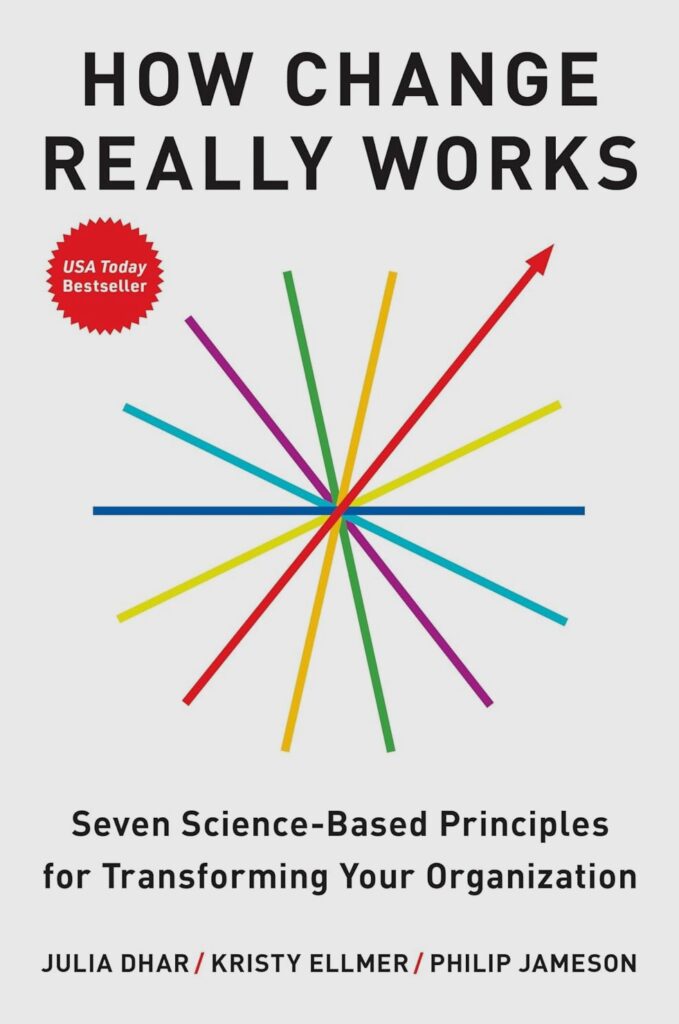
By Julia Dhar, Kristy R. Ellmer, and Philip Jameson
This is a sneak peek of this week's Deep Dives Book Review. Published today!
Why do so many organizational transformations fail, even when the strategy makes sense and the leadership team believes the case for change is obvious? In How Change Really Works, Julia Dhar, Kristy R. Ellmer, and Philip Jameson argue that change fails less because people resist it, and more because leaders misunderstand how people actually adopt new behaviors. This Deep Dive unpacks the book’s seven science-based principles, from closing the “change distance” between executives and employees to earning adoption, measuring emotion, building rituals, telling better stories, and sustaining momentum long after the launch announcement fades.
Intelligence is a wonderful asset, but it is not a guarantee of good judgment. In fact, intelligence can sometimes make wrong beliefs harder to dislodge, because smart people often have better tools for defending what they already want to believe. They can build stronger arguments, find more sophisticated evidence, explain away contradictions more elegantly, and make uncertainty sound like confidence.
That is the uncomfortable truth. Being smart does not automatically make someone wise, fair, accurate, discerning, or honest with themselves. Intelligence gives us processing power. It does not guarantee that we are processing the right things for the right reasons.
A smart person can still believe the wrong thing because belief is not only an intellectual act. We often believe what protects our identity, reduces our anxiety, preserves our status, confirms our tribe, explains our disappointment, or allows us to keep living without changing too much.
Intelligence Can Serve the Ego
One of the great dangers of intelligence is that it can become the ego’s legal department. Once we want something to be true, the mind goes to work defending it. It can gather selective facts, discredit opposing views, create impressive explanations, and make the preferred conclusion feel inevitable.
This is why some very intelligent people are not less biased than everyone else. They are sometimes better at protecting their biases from scrutiny.
The issue is that understanding something is not the same as being willing to let it change you. A person can comprehend a better argument and still reject it because accepting it would require too much humility, loss, apology, or revision.
Certainty Feels Safer Than Truth
People often prefer certainty to truth because certainty reduces anxiety. Certainty, even when false, provides emotional relief.
Smart people are not immune to that need. They may simply dress it better.
The danger is that something can feel calming and still be wrong.
Identity Is Stronger Than Evidence
The hardest beliefs to change are rarely the purely factual ones. They are the beliefs tied to identity.
Intelligence does not remove this problem. Sometimes it intensifies it because the smarter person has more identity invested in being right.
Persuasion Is Not Proof
We live in a world where persuasion has become more abundant than wisdom.
Smart people can be especially vulnerable to sophisticated persuasion because they enjoy complexity, novelty, and cleverness.
Discernment begins when we stop asking only, “Does this sound smart?” and start asking, “What would have to be true for this to be right?”
The Tribe Rewards Agreement
Beliefs are also social. We like to imagine that we think independently, but most of us are influenced by the people whose respect we want to keep.
But consensus is not always wisdom. Sometimes it is simply social pressure wearing intellectual clothing.
The disciplined thinker must be willing to ask, “Would I still believe this if it cost me approval?”
Good Judgment Requires Emotional Honesty
The path out of wrong belief is not merely more information. The real issue is not access to data. It is the quality of our relationship with truth.
Good judgment requires emotional honesty. It requires admitting when our anger, fear, ambition, loyalty, resentment, or pride may be shaping what we call analysis.
Feelings often contain useful information. But feelings should not be allowed to secretly write the conclusion while intelligence is hired afterward to make the conclusion sound respectable.
The wisest people are not those who never believe wrong things. They are those who can detect the moment when belief has become too comfortable, too identity-protective, too socially convenient, or too emotionally rewarding to be trusted without examination.
Staying Teachable
The real safeguard against believing the wrong things is not intelligence. It is teachability.
Teachability is the willingness to let new evidence disturb an old conclusion. It is the humility to say, “I may be missing something.”
Changing your mind can feel like losing status, especially for smart people who have built an identity around being perceptive. But the refusal to change one’s mind is far more dangerous. It turns intelligence into a fortress rather than a tool.
Smart people still believe the wrong things because intelligence alone cannot save us from ego, fear, identity, persuasion, tribe, or self-protection. Judgment requires something deeper. It requires humility. It requires patience. It requires the courage to examine not only what we think, but why we need to think it.
Intelligence can help us win arguments. Discernment helps us stop arguing with reality.
QUICK READ — PERSONAL DEVELOPMENT
Whose Definition of a Successful Life Are You Living?
Many people spend decades working with impressive discipline toward a life they never consciously chose. They achieve, advance, accumulate, provide, perform, and improve. They become responsible, admired, useful, and hard to ignore. From the outside, the life may look coherent. It may even look enviable.
But somewhere beneath the polished surface, a quieter question begins to form.
Whose definition of success am I living?
It is a dangerous question because it threatens the architecture of a life that may be working on paper.
Success can be real and still not be personal. It can be earned and still be borrowed.
The Definitions We Inherit
Most of us receive a definition of success long before we are wise enough to evaluate it. We learn what is admired before we understand what is meaningful.
The problem begins when we never examine the origin of the definition. We keep pursuing the symbol long after we have forgotten what it was supposed to solve.
That is how people end up living impressive lives that feel strangely uninhabited.
Approval Is a Powerful Architect
Approval builds many lives. Rarely with one dramatic demand. More often, approval shapes us through small signals.
We learn quickly which parts of us produce applause and which parts create discomfort. Then we begin editing accordingly.
A child praised for achievement may become an adult who feels uneasy at rest. A young person admired for being strong may become an adult who cannot ask for help.
The danger is not praise itself. The danger is when praise becomes the compass.
If your life is organized around what gets applauded, you may become very good at earning admiration and very poor at recognizing your own truth.
Success Can Become a Costume
There is a version of success that becomes a costume. It fits the role. It allows you to enter certain rooms, use certain language, belong to certain circles, and tell a story that sounds coherent.
But a costume, however beautiful, still has to be worn.
The role may bring real rewards, but it may also require the suppression of questions that would complicate the performance.
Do I actually want this? Do I still believe in this? Am I free inside this life, or merely competent at maintaining it? Would I choose this again if no one were impressed?
But those questions are also the beginning of honesty.
The Difference Between Achievement and Alignment
Achievement is easier to measure than alignment. Alignment is quieter. It asks whether the life you are building reflects the person you are becoming.
A life can be full of achievement and still be misaligned. You can be praised for the very life that is slowly making you less yourself.
This does not mean all discomfort is a sign of misalignment. But there is a difference between the discomfort of growth and the discomfort of self-abandonment.
One reason people continue living someone else’s definition of success is that changing direction disappoints the scorekeepers.
This is where courage becomes necessary.
At some point, an adult life requires the willingness to disappoint people whose definition of success depends on you staying legible to them. Not cruelly. Not recklessly. Not with theatrical rebellion. But with the calm recognition that the people who admire your life do not have to live inside it.
You do.
Asking Better Questions
The way out is not to reject every inherited value or burn down the life you built. Some inherited definitions of success are worth keeping.
The work is discernment.
What parts of my life feel chosen, and what parts feel inherited? What am I still doing for approval? What would I still pursue if nobody clapped?
Coming Home to Your Own Definition
A successful life does not have to look small, quiet, or anti-ambitious. The point is not to shrink. The point is to stop outsourcing the meaning of your life to people who do not have to carry its weight.
Whose definition of a successful life are you living?
If the answer is not yours, the work is not necessarily to abandon everything. The work is to begin telling the truth. To reclaim authorship. To stop confusing admiration with alignment. To understand that a life can look successful to others and still be asking you, quietly and persistently, to come home to yourself.
QUICK READ — LEADERSHIP
Why the Best Leaders Do Not Need to Be the Most Important Person in the Room
There is a version of leadership that confuses presence with importance. The leader enters the room, sets the tone, dominates the conversation, offers the sharpest opinion, corrects the weaker thinking, makes the final call, and leaves everyone with the unmistakable sense that the center of gravity has arrived.
Sometimes that looks impressive. But when a leader always needs to be the most important person in the room, the room eventually becomes smaller.
The best leaders understand this. They know leadership is not the art of making every room revolve around them. It is the discipline of making the room more capable because they are in it.
The Ego of Centrality
Being central can feel like leadership because so much of organizational life points toward the person with authority.
That kind of centrality can become addictive. The leader starts believing that if they are not involved, the work is weaker.
But leadership maturity requires asking a harder question: am I making the room better, or merely reminding everyone that I am important?
Importance Can Silence Intelligence
When one person must remain the most important voice, the rest of the room adjusts. People become more careful. They may still contribute, but their contribution becomes partly shaped by the leader’s emotional gravity.
This is costly because the organization loses access to the unfiltered intelligence of its people. Everyone becomes a little more fluent in the politics of the room.
The leader may not notice the loss because the meeting still sounds productive. But the room is no longer thinking at full strength. It is thinking around the leader.
That is one of the hidden costs of needing to be important. You may still get participation, but you do not get the best of people. You get the safest version of what they think.
The Best Leaders Create Ownership, Not Dependence
A leader who needs to be central creates dependence. A leader who is secure enough to step back creates ownership.
Ownership is not created by telling people to “own it” while retaining all meaningful authority.
But development requires space. If the leader always supplies the answer, others may admire the answer, but they do not build the muscle of judgment.
The best leaders are not trying to prove how much the organization needs them. They are trying to build an organization that needs more people to think, decide, and lead well.
Restraint Is a Leadership Skill
Some leaders believe restraint looks passive. It does not. Restraint can be one of the most active and disciplined forms of leadership.
It takes restraint to ask a question when you already have an opinion. It takes restraint to notice your impulse to dominate and choose instead to make space.
This kind of restraint is not weakness. It is confidence without appetite.
The Room Should Not Need the Leader’s Mood
When a leader is too important in the room, their mood becomes the weather.
The best leaders know this and take responsibility for it. They understand that power amplifies tone.
Making Others Bigger
The highest expression of leadership is not being admired. It is making others more capable.
The best leaders use their presence to enlarge people. They ask questions that sharpen thinking. They surface quiet voices.
They know the goal is not to be the sun around which everyone orbits. The goal is to create enough light that others can see.
The Legacy of a Less Central Leader
The irony is that leaders who do not need to be the most important person in the room often become more respected, not less.
Their legacy is not that every room needed them. Their legacy is that more rooms worked because of them, even when they were not there.
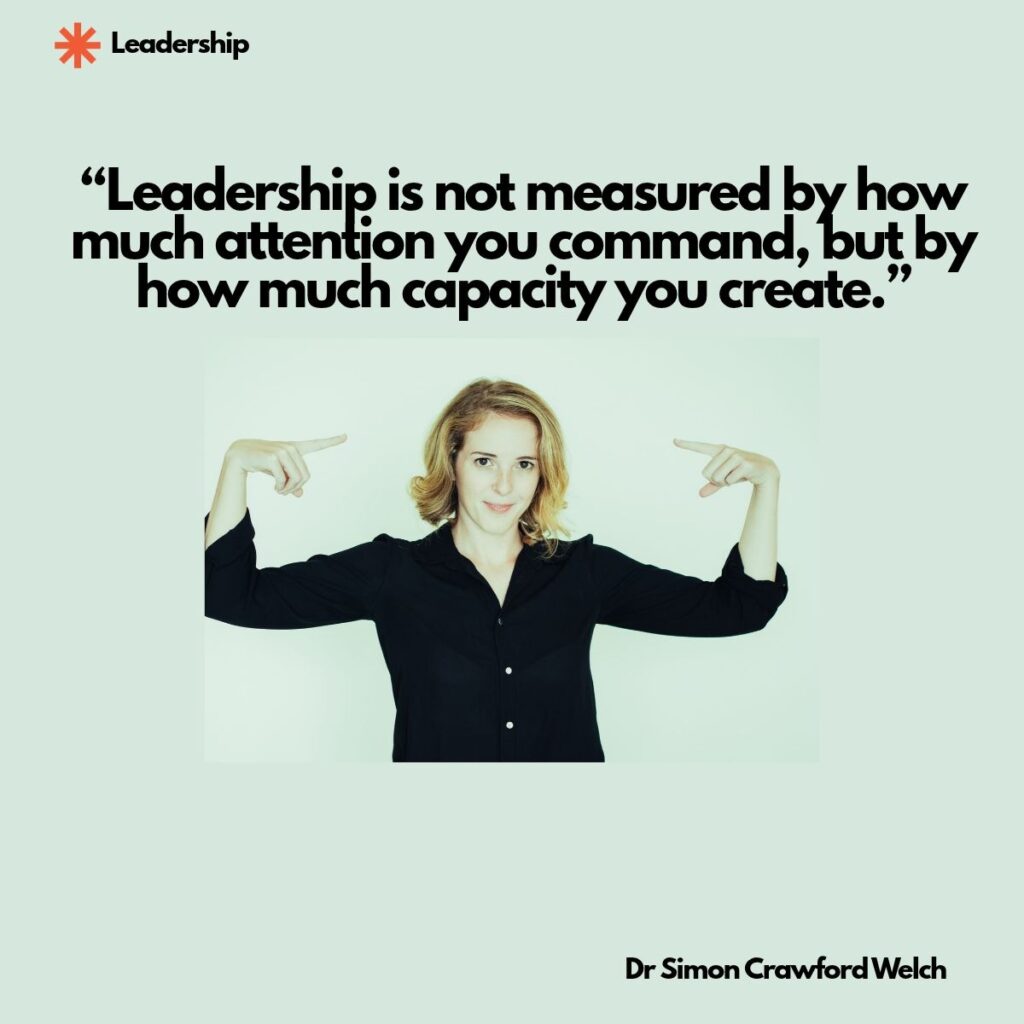
That is the deeper measure of leadership. Not how much attention you command, but how much capacity you create. Not how many decisions run through you, but how many people learn to make better decisions because of you. Not whether you are the most impressive voice in the meeting, but whether the meeting becomes more honest, thoughtful, and accountable because you were part of it.
The best leaders do not need to be the most important person in the room because they are not there to be important. They are there to make the work better, the people stronger, and the organization less dependent on any one person’s ego, mood, or brilliance.
That is not a smaller form of leadership. It is a more mature one.
Quotes of the Week
QUOTE — EMOTIONAL INTELLIGENCE
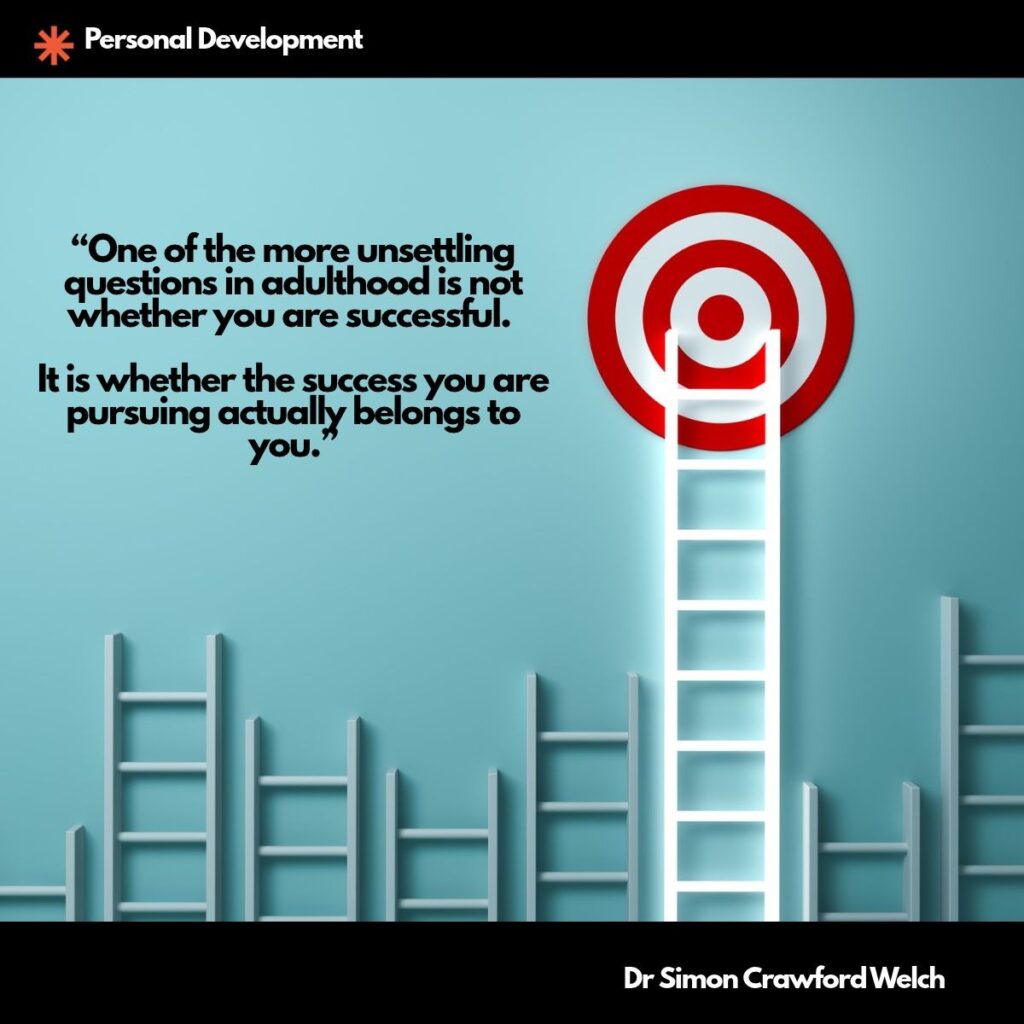
QUOTE — PERSONAL DEVELOPMENT
QUOTE — LEADERSHIP
Reframing
The Version of You That Got Here May Not Be the Version That Goes Further
One of the more difficult truths of growth is that the traits that helped us survive one chapter can become the very traits that limit the next. The habits, instincts, defenses, ambitions, and identities that once protected us may eventually begin to constrain us. What looked like strength in one season may look like rigidity in another. What once created momentum may later create exhaustion. What once made us valuable may quietly become the thing that keeps us from evolving.
The version of you that got here may not be the version that goes further.
That sentence is easy to agree with in theory and hard to live in practice. Most of us become attached to the selves that delivered results. The driven self. The careful self. The strong self. The independent self. The pleasing self. The relentless self. The controlling self. The self that outworked everyone, anticipated danger, avoided disappointment, carried the load, kept peace, solved problems, stayed useful, stayed impressive, and refused to fall apart when falling apart would have been understandable.
We owe that version gratitude. But we may not owe it permanent control.
Survival Skills Are Not Always Growth Skills
Many of our most praised qualities began as survival strategies. The person who became hyper-independent may have learned early that depending on others was unsafe. The person who became a perfectionist may have learned that mistakes invited criticism or shame. The person who became endlessly useful may have learned that usefulness was the safest way to be loved. The person who became intensely driven may have learned that achievement was the only reliable path to recognition.
Those adaptations may have worked. They may have helped you build a career, protect a family, earn trust, overcome disadvantage, survive disappointment, or escape a life that once felt too small. We should not casually dismiss the parts of ourselves that helped us endure.
But survival skills are designed for survival. They are not always designed for freedom.
The hyper-independent person may struggle to receive love. The perfectionist may struggle to move quickly or trust others. The endlessly useful person may struggle to set boundaries. The intensely driven person may struggle to rest, be present, or know when enough is enough. What once kept you safe may later keep you small.
The question is not, “Was this version of me wrong?” The better question is, “Is this version of me still the one the future requires?”
Success Can Make Old Patterns Harder to Question
It is hard to change patterns that failed. It is even harder to change patterns that worked.
When a way of being produces results, we naturally defend it. We tell ourselves, “This is how I got here.” We point to the evidence. The promotion. The business. The reputation. The financial security. The respect. The survival of difficult seasons. The people who depend on us. The life that would not exist had we not become this particular version of ourselves.
That evidence matters. But evidence of past usefulness is not proof of future fit.
This is where successful people often get stuck. They over-identify with the qualities that built the first chapter and then try to force those same qualities onto the next. The founder who built through instinct refuses to build through structure. The executive who rose through personal force resists developing others. The leader who succeeded by having all the answers struggles when the organization needs them to ask better questions. The person who built a life through relentless effort cannot understand why more effort is no longer producing more meaning.
Success can turn a former adaptation into an identity. Once that happens, change feels like betrayal. Letting go of the old version feels like dishonoring the work it did.
But growth is not betrayal. Sometimes growth is gratitude expressed through release.
Every New Level Asks for a Different Capacity
The next chapter of life rarely asks for exactly the same thing as the previous one. The early chapter may have required hunger. The next may require discernment. The early chapter may have required speed. The next may require patience. The early chapter may have required proving yourself. The next may require no longer organizing your life around proof.
In business, this is obvious. A company cannot scale indefinitely on the same operating habits that got it started. The scrappy stage requires improvisation, speed, personal heroics, and tolerance for chaos. A larger organization requires systems, clarity, delegation, accountability, leadership depth, and repeatable standards. The company that refuses to mature becomes trapped inside the strengths of its origin story.
People are not so different.
A younger version of you may have needed ambition to escape limitation. A wiser version may need purpose to avoid becoming trapped in achievement. A younger version may have needed toughness to survive heartbreak. A wiser version may need openness to experience intimacy again. A younger version may have needed control to feel safe. A wiser version may need trust to stop living as though every room is dangerous.
Every level asks a question: what must be strengthened, and what must be surrendered?
The Cost of Staying Loyal to an Outdated Self
There is comfort in being familiar to ourselves. Even when a pattern costs us, it can feel like home. We know how to be the responsible one, the impressive one, the fixer, the fighter, the one who does not need much, the one who keeps going, the one who always finds a way.
The problem is that over-identification with an old self can quietly narrow a life.
You may keep saying yes because the old self was rewarded for being useful. You may keep overworking because the old self believed rest was dangerous. You may keep avoiding vulnerability because the old self learned that needing people led to disappointment. You may keep controlling because the old self confused uncertainty with threat. You may keep chasing admiration because the old self never felt fully seen.
At some point, loyalty to an outdated self becomes disloyalty to the life that is trying to emerge.
This can be painful because the old self often has a compelling case. It says, “I got us here.” And it is right. But then the deeper self must answer, “Yes, and now I need to go further than survival, further than proof, further than control, further than the habits that once protected us but now keep us repeating ourselves.”
That conversation is the heart of growth.
Reinvention Is Not Rejection
Many people resist change because they assume reinvention means rejecting who they have been. But reinvention does not require contempt for the old self. In fact, the healthiest reinvention begins with respect.
Thank the version of you that carried the weight. Thank the version that stayed up late, kept going, learned the lesson, absorbed the shock, built the life, made the sacrifice, and refused to quit. That version deserves honor.
But honor does not mean obedience.
You can appreciate a former version of yourself without allowing it to govern every future decision. You can say, “That was necessary then,” and still say, “It is not sufficient now.” You can keep the courage while releasing the defensiveness. Keep the discipline while releasing the self-punishment. Keep the standards while releasing the perfectionism. Keep the ambition while releasing the need to prove. Keep the strength while releasing the isolation.
Growth is rarely about becoming an entirely different person. It is often about rescuing the best parts of yourself from the coping mechanisms that once surrounded them.
The Courage to Be New at Life Again
One reason people cling to the old version is that it comes with competence. You know how to be that person. You know the lines, the reflexes, the defenses, the moves. Becoming a new version of yourself can feel awkward. You may not yet know how to lead without controlling, love without testing, work without overfunctioning, succeed without performing, or rest without guilt.
That awkwardness is not failure. It is evidence that something new is being learned.
Growth often makes capable people feel temporarily incompetent. This is why many retreat to the familiar. Better to be excellent at an old pattern than clumsy inside a new one. But that is how people remain polished and stuck.
The next version of you may not arrive fully formed. It may begin as a pause where you would normally react. A no where you would normally overextend. A question where you would normally control. An honest admission where you would normally perform strength. A moment of rest where you would normally prove worth through exhaustion.
Small choices become the rehearsal space for a larger self.
Becoming Available to the Future
The future does not always need more of the old intensity. Sometimes it needs more honesty. More softness. More patience. More courage of a different kind. More willingness to be seen without armor. More capacity to trust others with weight. More discernment about what deserves your effort and what only feeds an old identity.
The version of you that got here deserves respect. But the question now is whether that version can evolve.
Can the achiever become more present? Can the fixer become more boundaried? Can the strong one become more reachable? Can the independent one receive help? Can the leader who once needed to be central build something that thrives without constant rescue? Can the person who survived by controlling learn to live without gripping so tightly?
These are not small shifts. They are identity-level changes. But they are often the difference between continuing to succeed and actually continuing to grow.
The version of you that got here may not be the version that goes further. That is not a condemnation of who you have been. It is an invitation to become less governed by who you had to be.