I write about Personal Development / Emotional Intelligence / Leadership / Transformative Thinking / Innovative Approaches / Intellectual Integrity / Innovation / Empowerment / Organizational Transformation
Insights Newsletter No. 224
Published about 1 month ago • 17 min read
INSIGHTS
Newsletter No. 224
Good morning. Clarity rarely arrives while you are still negotiating with the version of yourself that benefits from confusion.
Insights, now in my voice.
New! You can hear the Insights Newsletter straight from me. I've recorded this issue, and every Deep Dive on the site now has an audio version too. If you'd rather listen than read, tap the button, and you'll find the player at the top of the page on the website. And if reading is your thing, carry on, everything is right here as always.
This is a sneak peek of this week’s Deep Dives article. Published today!
Power rarely announces its effect on the person who has it. That is part of what makes it dangerous. It changes the room before it changes the leader. Then, slowly, the leader begins to mistake the changed room for an accurate reflection of themselves.
This is a sneak peek of this week’s Deep Dives article. Published today!
Power changes the room before it changes the leader. People agree faster, challenge more carefully, soften bad news, and manage reactions long before the person in charge realizes the truth has started arriving pre-edited. This Deep Dive examines why power requires more honesty, not less, and why the real test of leadership is not whether people listen when you speak, but whether truth can still reach you after everyone has learned how much influence you have.
This is a sneak peek of this week’s Deep Dives article. Published today!
Ego rarely appears on a company’s P&L, but it shows up everywhere else: slower truth, smaller talent, weaker decisions, political meetings, delayed accountability, and the exhausting work of managing a leader who cannot be challenged. This Deep Dive explores why ego is one of the most expensive hidden taxes in any organization, and why humility is not just a personal virtue, but an operating advantage that allows reality to enter before the bill comes due.
This is a sneak peek of this week's Deep Dives Book Review. Published today!
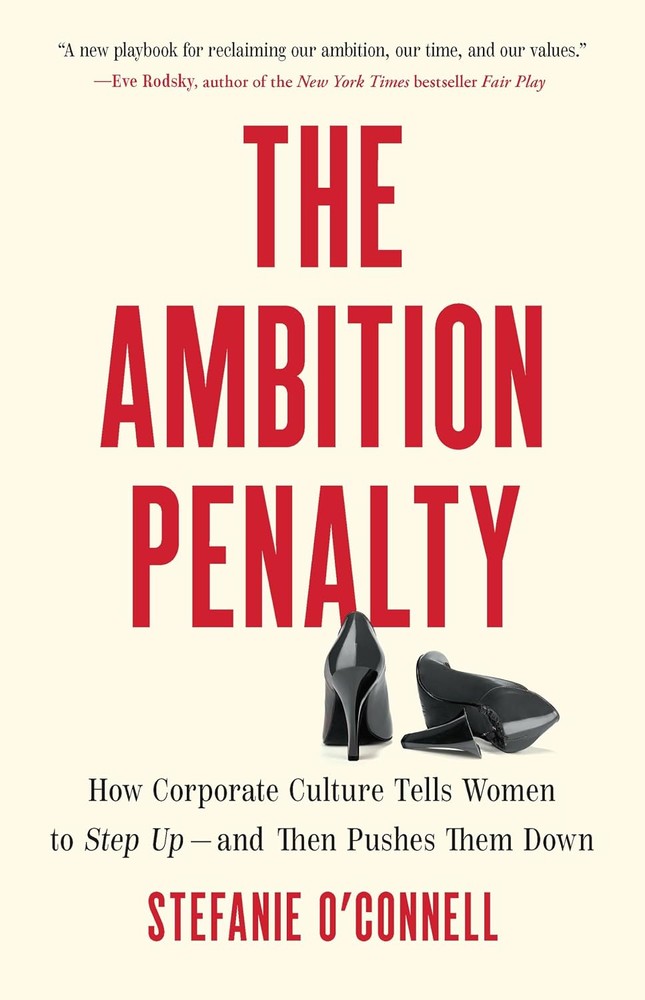
What if women are not lacking ambition, but being penalized for it? In The Ambition Penalty, Stefanie O’Connell challenges the familiar advice that tells women to lean in, speak up, negotiate harder, and be more confident, while ignoring the corporate cultures that often punish them for doing exactly that. This Deep Dive explores why ambition is interpreted differently depending on who expresses it, how the “fix the woman” playbook lets organizations avoid deeper change, and why the real issue is not whether women want more, but whether workplaces are truly willing to reward them when they do.
The Hidden Emotional Cost of Always Being the Strong One
There is a particular kind of person everyone learns to rely on. The steady one. The capable one. The one who holds it together when everyone else is falling apart. The one who answers the phone, absorbs the pressure, solves the problem, takes the late call, carries the difficult conversation, remembers what needs to be done, and somehow manages to make other people feel safe even while quietly running out of oxygen themselves.
But strength can become a role so convincing that people forget there is still a human being underneath it.
The hidden emotional cost of always being the strong one is that your pain becomes less visible, even to people who love you. Your competence becomes camouflage. Your reliability becomes an expectation.
That is how strength quietly becomes isolation.
Strength Becomes a Contract
But over time, strength can become an unspoken contract. Other people get to have needs. You get to have responsibilities. Other people get to break down. You get to function.
The danger is not that others rely on you. Relationships require reliance. The danger begins when reliance turns into entitlement, when people stop asking whether you are okay because they have become accustomed to you making sure they are.
The Strong One Often Learns to Need Quietly
People who are always strong often do not stop having needs. They simply become skilled at hiding them. They need reassurance, but ask for advice. They need comfort, but offer solutions.
The strong one may privately long to be cared for, while publicly training everyone not to worry about them. They say, “I’m fine,” too convincingly.
Then, when no one notices the pain, resentment grows.
So the strong one keeps giving what they have trouble receiving.
Competence Can Hide Collapse
One of the cruel things about high-functioning pain is that it does not always look like pain. It looks like performance.
But people do not become less human because others depend on them. They simply become more practiced at delaying their own humanity.
Sometimes the strong one does not break. They harden. That may look like survival, but it is also a kind of loss.
Being Needed Is Not the Same as Being Known
The strong one is often deeply needed. But being needed and being known are not the same.
Being needed means people trust your utility. Being known means people understand your interior life.
You may be the first person everyone calls, but the last person anyone checks on with real curiosity. You may be praised constantly for being strong, while secretly wishing someone would value you enough to say, “You don’t have to be strong with me.”
That sentence can feel almost unbearable when you have spent a lifetime holding the line.
Strength Without Softness Becomes Armor
Strength is not the problem. The problem is strength without softness. Strength that never allows itself to be held eventually becomes armor.
Armor protects, but it also separates. It keeps pain from being easily touched, but it also keeps comfort from getting in.
The work is not to become weak. The work is to become honest.
Honest enough to say, “I am tired.” Honest enough to ask for help before resentment writes the script.
There is nothing noble about disappearing inside other people’s needs.
Letting Others Carry Some Weight
For the strong one, one of the hardest acts of growth is allowing other people to carry weight badly at first.
But if no one is ever allowed to practice showing up for you, the old pattern remains intact. You stay overburdened, and everyone else stays underdeveloped.
Sometimes love means carrying. Sometimes love means allowing yourself to be carried.
A Better Definition of Strength
A better definition of strength would include the courage to be truthful about limits. It would include the humility to receive care without apology.
Always being the strong one may have helped you survive.
But it should not be the whole of who you are.
You are allowed to be dependable without being depleted. You are allowed to be resilient without being unreachable. You are allowed to be capable and still need comfort. You are allowed to be the strong one and still want someone, just once, to notice the weight before you have to explain why your arms are shaking.
Real strength is not the ability to carry everything forever. It is the wisdom to stop pretending that you were ever meant to.
QUICK READ — PERSONAL DEVELOPMENT
What Are You Still Trying to Prove, and to Whom?
There comes a point in adult life when ambition deserves to be questioned, not because ambition is bad, but because not all ambition is clean. Some of it is healthy, purposeful, generous, and alive.
But some ambition is not really aspiration. It is old pain wearing a suit.
It is the need to prove that we were underestimated, overlooked, dismissed, misunderstood, rejected, or not enough. It is the private courtroom we carry inside ourselves, where we keep presenting evidence to people who may no longer be watching, may never understand, or may not even deserve the power we keep giving them.
That is the question worth asking honestly: what are you still trying to prove, and to whom?
The Invisible Audience
Many people live with an invisible audience. A parent who withheld approval. A teacher who humiliated them. A boss who dismissed their talent.
That invisible audience can be powerful. Many impressive lives have been built from the energy of proving someone wrong.
But fuel is not the same as freedom.
Proving Is Not the Same as Becoming
There is a difference between becoming who you are meant to be and proving that someone else was wrong about you. The first is rooted in growth. The second is rooted in argument.
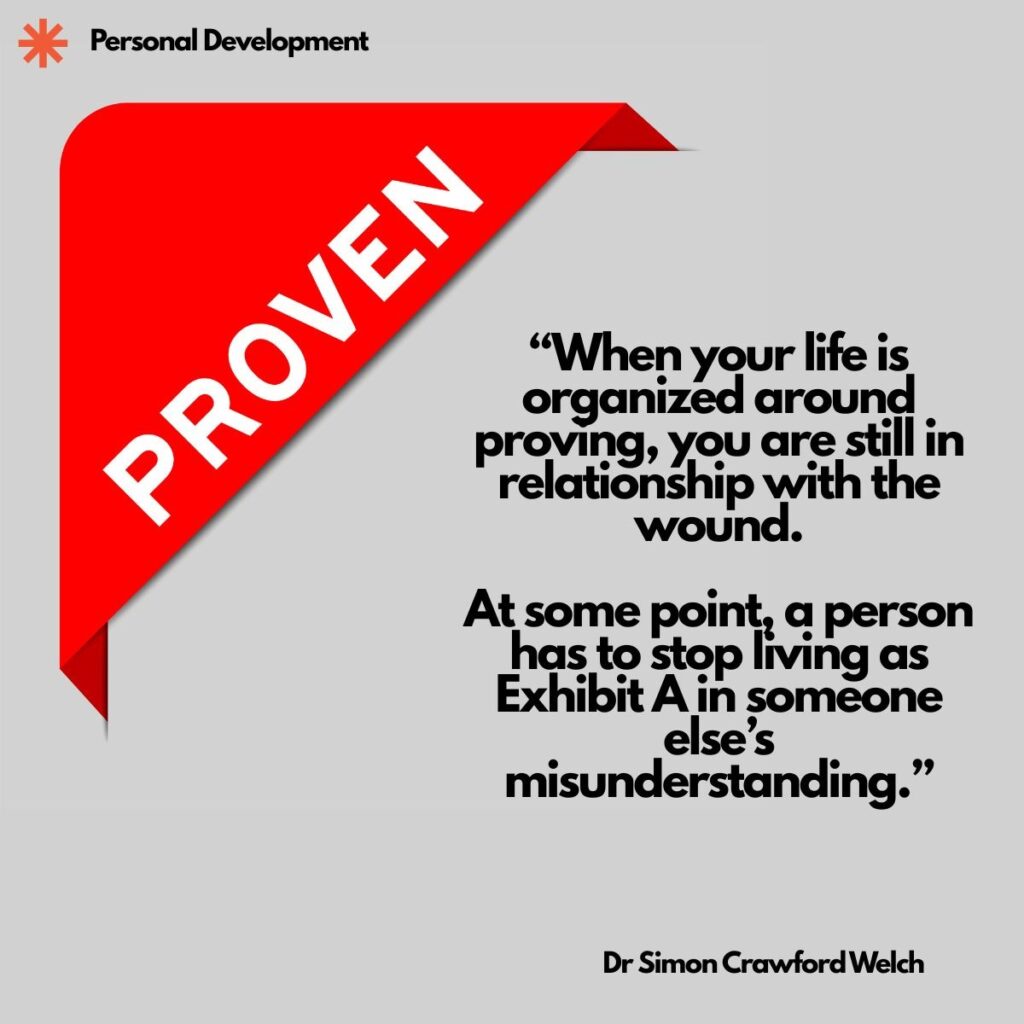
When your life is organized around proving, you are still in relationship with the wound. You are not simply moving toward a future. You are dragging an old courtroom into every new room.
But the relief fades quickly because the deeper need was never really for the achievement. It was for healing, recognition, dignity, repair, or self-acceptance. Achievement can decorate the wound. It cannot always close it.
The Cost of Chasing a Verdict
Trying to prove yourself can be useful for a season, but costly when it becomes identity. It can make rest feel like weakness. It can make ordinary joy feel insufficient because joy does not produce evidence.
When proving is in charge, peace feels suspicious. Calm can feel like loss of edge. Contentment can feel like complacency. Enough can feel like defeat.
That is how old wounds keep renewing themselves. They convince us that if we stop proving, we will disappear.
The People You Are Trying to Impress May Not Be Worth Impressing
One of the great indignities of proving is that we often hand enormous power to people whose judgment may not have been worthy in the first place.
Why should their opinion still be the court of final appeal?
Their inability to recognize you may say more about their limitations than your worth.
The tragedy is that we sometimes keep pursuing validation from the very kind of people who were never equipped to give it cleanly. We try to extract blessing from the same source that created the hunger.
That is not ambition. That is captivity.
When the Proving Stops
The end of proving does not mean the end of effort. When you stop trying to prove your worth, you can finally direct your energy toward work that is more honest.
You can build because the work matters, not because someone needs to be silenced. You can grow because you are alive, not because you are still trying to win an argument with the past.
There is freedom in no longer needing every success to testify on your behalf.
The Hard Question
The hard question is not whether you want to achieve. Wanting to achieve can be beautiful. The hard question is whether your achievement is still being used as evidence in an old case.
What would you keep doing if there were no one left to impress? What would you stop doing if you truly believed your worth was no longer on trial?
At some point, a person has to stop living as Exhibit A in someone else’s misunderstanding.
Becoming Free From the Case
You may never receive the apology. You may never hear the words, “I was wrong about you.”
The question is not whether they finally understand. The question is whether you are willing to stop organizing your life around their failure to understand.
That is where freedom begins.
Not when ambition disappears, but when ambition is no longer contaminated by the need to prove you were worthy all along.
What are you still trying to prove, and to whom?
Answer that honestly, and you may discover that the life you are building does not need to be an argument anymore. It can finally become an expression.
QUICK READ — LEADERSHIP
Success Creates Blind Spots Failure Never Could
Failure is usually loud. It interrupts the story. It embarrasses us, slows us down, exposes weakness, and forces questions we would rather avoid. Failure may be painful, but it often does us one strange favor: it makes denial harder to sustain.
Success is more dangerous because it does the opposite. It confirms the story.
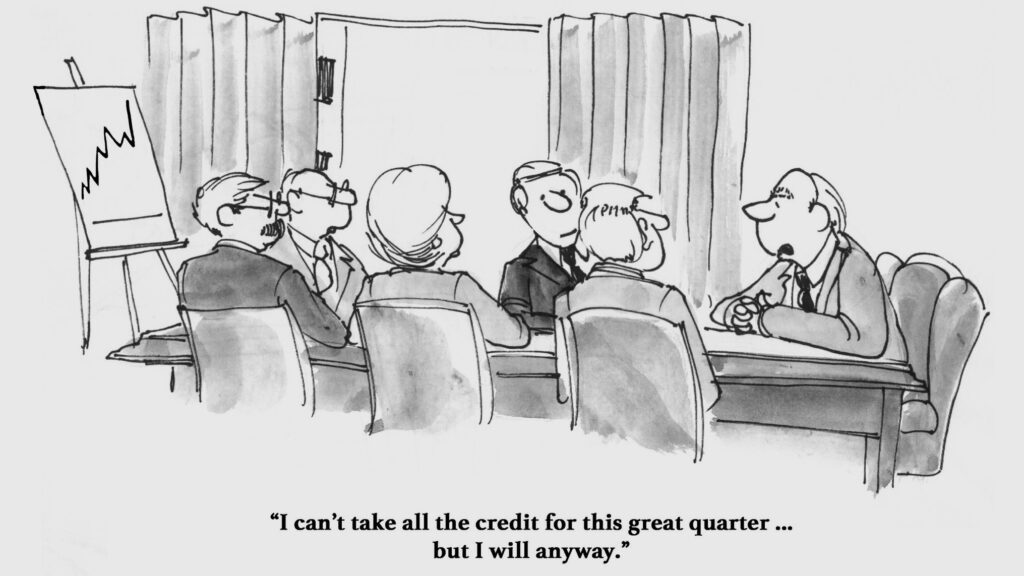
Success wraps our assumptions in evidence. It makes our habits look wise. It turns our preferences into principles. It can make luck look like genius and timing look like strategy.
That is why success creates blind spots failure never could.
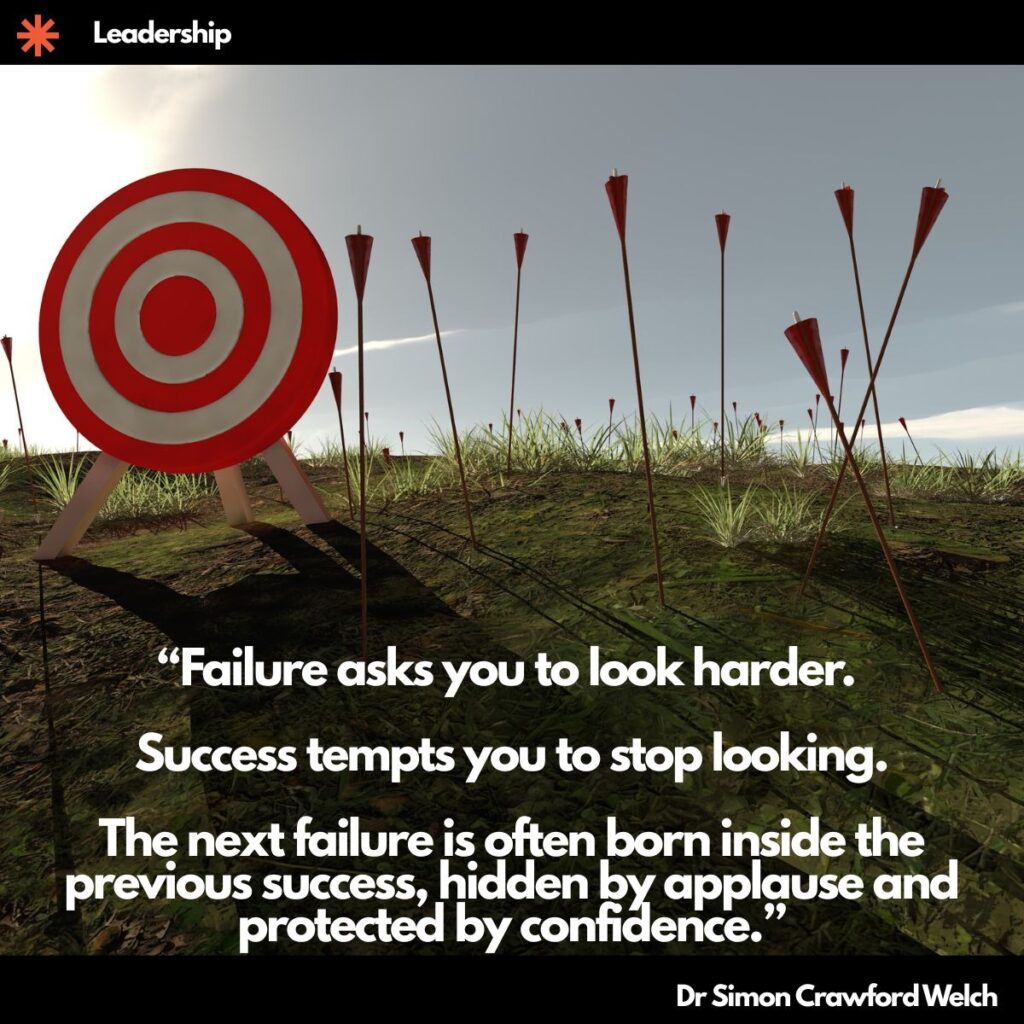
Failure asks you to look harder. Success tempts you to stop looking.
The Seduction of Being Right
Success has a way of making people feel chosen by logic. We did the thing, the thing worked, therefore our thinking must have been sound. That conclusion may be partly true, but it is rarely the whole truth.
The problem begins when we simplify the story afterward.
We remember our courage more vividly than our good fortune. Success can turn a complicated outcome into a flattering autobiography.
Being right once is useful. Needing to remain right is dangerous.
Success Makes the Room More Careful
Failure often invites criticism. Success attracts agreement.
The higher the success, the more carefully truth tends to enter the room.
People start managing the leader’s confidence.
The leader may not notice this happening. They may say, “I welcome challenge,” and genuinely mean it. But if the organization has learned that the leader’s confidence is now part of the culture, people will challenge gently, strategically, and often too late.
Success does not always silence dissent through fear. Sometimes it silences dissent through admiration.
The Playbook Becomes a Prison
One of the greatest risks of success is overlearning the lesson. A strategy works, so we repeat it.
The playbook that created one phase of success may be poorly suited to the next. The scrappy habits that built the early company may become chaos at scale.
Success makes the old playbook emotionally harder to question because it has evidence behind it. People can point to the results and say, “This is why we won.” They may be right. But the better question is, “Will this continue to help us win where we are going?”
The Ego Learns to Speak in Business Language
Success gives ego a larger vocabulary. It stops sounding like arrogance and starts sounding like conviction, standards, culture, excellence, speed, instinct, vision, or founder DNA.
The successful leader must learn to ask, “Am I defending the principle, or defending myself?” Ego is rarely stupid. It knows how to hide inside noble language.
Comfort Can Become a Strategy Killer
Failure creates discomfort, but success creates comfort. Comfort is pleasant. It is also quietly dangerous because it reduces urgency.
Why change what is working?
That question sounds sensible until working becomes fading.
By the time the need for change becomes obvious, the cost of change is usually higher.
The best leaders do not wait for failure to give them permission to evolve. They create disciplined discomfort while things are still working.
Gratitude Without Complacency
The answer is not to distrust success or become allergic to achievement. Success should be enjoyed.
But gratitude is different from complacency.
Success becomes healthier when it is studied, not worshiped.
That study should include uncomfortable questions. What did we get right? What did we merely survive? Where were we lucky?
Those questions do not diminish success. They protect it.
The Discipline of Staying Teachable
The most impressive successful people are not those who keep announcing what made them successful. They are those who remain teachable after the world gives them reasons not to be.
That is harder than it sounds. Failure humbles us by force. Success requires voluntary humility.
Success creates blind spots failure never could because success feels like confirmation. It tells us the story is working. It tells us our instincts are sound. It tells us the room believes. It tells us the playbook deserves another run.
Sometimes that is true.
But sometimes success is simply the most flattering place to stop paying attention.
The strongest leaders do not let success become a sedative. They treat it as evidence to examine, not a throne to sit on. They understand that the next failure is often born inside the previous success, hidden by applause, protected by confidence, and ignored because the numbers still looked good.
Quotes of the Week
QUOTE — EMOTIONAL INTELLIGENCE
QUOTE — PERSONAL DEVELOPMENT
QUOTE — LEADERSHIP
Reframing
Sometimes the Healthiest Emotion Is the One You Stop Apologizing For
Somewhere along the way, many people learn to apologize for having a normal human response to abnormal treatment. They apologize for being hurt. They apologize for being angry. They apologize for needing space. They apologize for being disappointed. They apologize for saying no. They apologize for not recovering quickly enough, not being more understanding, not absorbing more, not making everyone else feel comfortable with the consequences of what happened.
The apology becomes automatic. “Sorry, I’m just upset.” “Sorry, I know I’m being sensitive.” “Sorry, I should be over this by now.” “Sorry, I don’t mean to make this awkward.” We soften the feeling before we have even listened to it. We reduce its authority in the room because we are afraid of being too much, too difficult, too emotional, too inconvenient, or too honest.
But sometimes the healthiest emotion is the one you stop apologizing for.
Not because every emotion is accurate. Not because feelings should run the room. Not because anger, grief, hurt, resentment, or fear gives anyone permission to behave badly. But because emotions often carry information we need, and when we apologize too quickly for having them, we may be abandoning the very signal that is trying to protect us.
The Politeness of Self Betrayal
Many people confuse emotional maturity with emotional neatness. They think the goal is to feel things quietly, explain them elegantly, inconvenience no one, and remain pleasant even when something important inside them has been violated. This is especially true for people who were rewarded for being reasonable, useful, calm, agreeable, or low maintenance.
There is a kind of social praise that can quietly train self betrayal. People like the person who does not make a fuss. The one who understands. The one who moves on. The one who makes allowances for everyone else. The one who absorbs the slight, the insult, the neglect, the broken promise, the unfairness, and then helps everyone else feel better afterward.
That can look gracious from the outside. Inside, it can become a slow erosion of self respect.
Sometimes the apology is not about kindness. It is about fear. Fear that if you express anger, you will be rejected. Fear that if you name disappointment, you will be seen as needy. Fear that if you say something hurt you, you will be accused of being dramatic. Fear that if you stop managing everyone else’s comfort, the relationship will not survive the truth.
So you apologize for the emotion rather than examine what created it.
Anger Is Not Always the Problem
Anger is one of the most misunderstood emotions because it can be destructive when mishandled. We have all seen anger used as intimidation, punishment, cruelty, manipulation, or control. So it is understandable that thoughtful people become cautious around it.
But anger is not always the problem. Sometimes anger is the part of you that still knows where the boundary was.
There is healthy anger. The anger that says, “This is not acceptable.” The anger that refuses to keep calling disrespect a misunderstanding. The anger that stops making excuses for repeated harm. The anger that finally interrupts a pattern you have been explaining away for too long.
That kind of anger does not need to be dramatized, weaponized, or performed. It needs to be respected. It may arrive with heat because some truths had to push through years of politeness before they could be heard.
The goal is not to become an angry person. The goal is to stop treating anger as automatically less trustworthy than compliance. Sometimes the calmest version of yourself is not the healthiest version. Sometimes it is the most edited version.
Grief Does Not Owe Anyone a Timeline
Grief is another emotion people are pressured to apologize for. Not always directly, but through the impatience of others. People may offer sympathy at first, then gradually begin expecting your sadness to become less visible. They want signs of improvement. They want reassurance that you are moving forward. They want you to participate in life again in a way that makes them feel less helpless around your pain.
But grief does not move according to other people’s comfort.
You may grieve a death, a divorce, a friendship, a version of your child, a lost opportunity, a body that no longer does what it once did, a business that consumed years of your life, a family you wish you had, or a future that quietly disappeared while everyone else kept going. Not all grief receives public recognition. Some grief is private, complicated, and hard to explain without feeling foolish.
That does not make it less real.
When we apologize for grief, we often do so because we feel embarrassed by its persistence. We think sadness should be more efficient. But grief is not a project plan. It is love, attachment, identity, memory, and meaning trying to reorganize themselves around absence. It deserves patience, not shame.
Disappointment Is Often Clarity Arriving Late
Disappointment can feel petty compared with stronger emotions, but it is often deeply clarifying. It tells us where expectations met reality and reality failed to rise. It shows us where we were hoping someone would be more thoughtful, more honest, more present, more responsible, or more capable of meeting us with care.
Many people apologize for disappointment because they think it sounds demanding. They say, “I know I shouldn’t have expected anything.” But expectations are not automatically wrong. Some expectations are expressions of basic relational dignity. It is reasonable to expect honesty from a partner, accountability from a leader, respect from a colleague, reliability from a friend, and kindness from people who claim to love you.
The work is not to eliminate disappointment by pretending you expected nothing. The work is to learn from it.
Disappointment asks a serious question: was this a one time failure, or is this person showing me the level at which they are willing or able to meet me? That question is not bitter. It is clarifying. Sometimes disappointment is the emotion that helps us stop negotiating with evidence.
The Difference Between Feeling and Behaving
Of course, stopping the apology does not mean surrendering to emotional chaos. There is a difference between validating a feeling and justifying every behavior that follows it. You can honor anger without becoming cruel. You can honor grief without refusing all responsibility for your life. You can honor disappointment without punishing people indefinitely. You can honor fear without letting it make all your decisions.
Emotions deserve attention, but they do not deserve unquestioned authority.
This distinction matters because some people misuse emotional honesty as a license. They say, “I am just expressing how I feel,” while creating harm around them. That is not maturity. That is emotional entitlement.
The healthier path is more disciplined. It says, “This feeling is real, and I am responsible for what I do with it.” That sentence protects both truth and accountability. It allows the emotion to speak without letting it become a dictator.
What the Emotion Is Trying to Defend
The emotions we apologize for often defend something sacred. Anger may defend dignity. Grief may defend love. Disappointment may defend hope. Fear may defend safety. Resentment may defend a boundary we failed to set earlier. Sadness may defend the truth that something mattered more than we allowed ourselves to admit.
When we dismiss the emotion too quickly, we may lose contact with what it is protecting.
This is why the first question should not be, “How do I get rid of this?” The better question is, “What is this feeling trying to tell me?” It may be telling you to rest. To leave. To speak. To grieve. To forgive without returning. To stop overgiving. To ask for help. To admit that something you called fine has not been fine for a long time.
Sometimes the emotion is not overreaction. Sometimes it is the first honest reaction you have allowed yourself to have.
The Freedom of Not Explaining Everything
There is great freedom in realizing that you do not have to make every emotion presentable before it is legitimate. You do not have to write a legal brief proving why you are allowed to be hurt. You do not have to package your disappointment so carefully that no one feels challenged by it. You do not have to apologize for needing time to understand what something did to you.
There is maturity in pausing before speaking. There is wisdom in choosing your words carefully. But there is also self abandonment in editing your truth until it becomes harmless to the people who need to hear it.
The healthiest emotion may be the one that finally arrives without apology because it has been silenced for too long. Not shouted. Not weaponized. Not thrown at someone else. Simply allowed to exist with dignity.
“I am angry.” “I am hurt.” “I am disappointed.” “I am grieving.” “I am not ready.” “I need space.” “That was not okay.”
Those are not failures of character. They are sometimes the beginning of self respect.